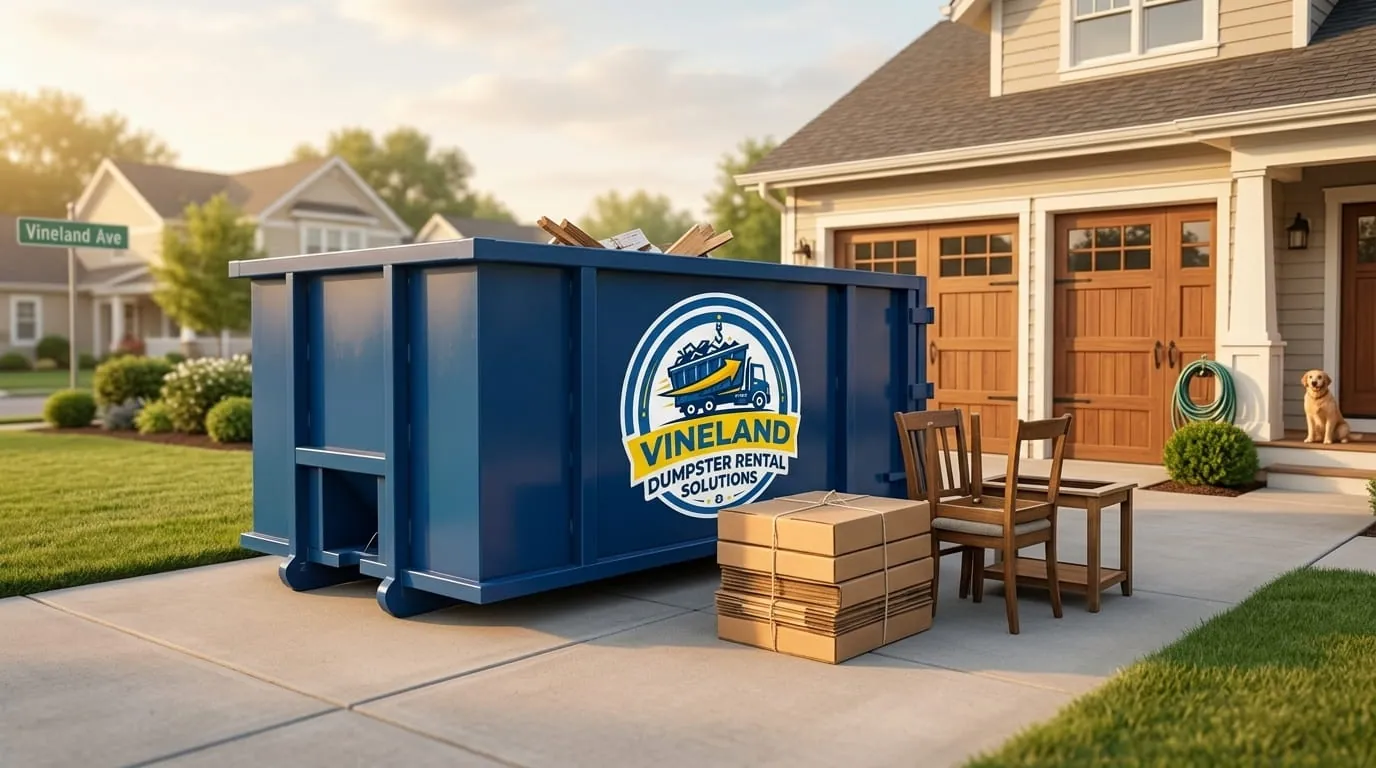
I have been dropping roll-off containers on driveways all over Cumberland County for years, and I can tell you the number one thing homeowners worry about right before delivery is not the cost or the size. It is the driveway. And they are right to worry. A dumpster is heavy metal sitting in one place for days, sometimes weeks, and if nobody thinks about it beforehand, you can end up with cracks, gouges, or dark stains that were not there when we pulled up.
The good news is that driveway damage is almost entirely preventable. It comes down to understanding where the weight goes, what your surface can handle, and a few cheap steps you take before the truck ever arrives. Let me walk you through how this actually works, not the sanitized version.
Why Roll-Off Dumpsters Are Hard on Driveways
People underestimate the numbers. An empty 20-yard roll-off container weighs somewhere around 3,000 to 4,000 pounds on its own. Fill it with roofing shingles, broken concrete, or wet demolition debris and you can be looking at 8,000 to 12,000 pounds, sometimes more. That entire load rides on a handful of small contact points: the rear wheels and the front rails or feet of the box.
Then there is the delivery truck itself. When we roll a container off the back of the truck, the truck's rear axle is carrying a huge share of the combined weight for a few seconds as the box tilts and slides down. Those are the moments when concentrated force hits your surface hardest. It is not the resting dumpster that usually does the damage. It is the delivery, the pickup, and the point loads underneath the container the whole time it sits there.
Asphalt Versus Concrete: They Fail Differently
Concrete is rigid. It handles steady weight well, but it cracks when force concentrates on one point, especially near an edge or over a weak spot where the base underneath has settled. If your concrete already has hairline cracks, a heavy dumpster can turn them into real ones.
Asphalt is a different animal. Asphalt is flexible, almost plastic, and it gets softer as it gets hotter. On a 90-degree South Jersey afternoon in July, the surface of a blacktop driveway can soften enough that the small wheels or rails of a loaded container press right into it and leave permanent dents or ruts. I have seen driveways that were perfectly fine in April get dimpled in August simply because of the heat. Newer asphalt, poured within the last year or two, is especially vulnerable because it has not fully cured and hardened.
The Simple Fix: Put Something Between the Dumpster and Your Driveway
The single most effective thing you can do is create a barrier that spreads the load out. When weight sits on a wide surface instead of a narrow one, the pressure per square inch drops dramatically, and that is what saves your driveway.
- Use thick plywood or OSB. Two layers of 3/4-inch plywood, or a sheet of 3/4-inch OSB, works well under the rear wheels and under the front rails of the container. This is the cheapest insurance you will ever buy.
- Cover the contact points, not the whole driveway. You do not need to tile your entire driveway. You need boards under the two rear wheels and under the front tongue or feet where the box rests.
- Go bigger than you think. A wheel that lands half on a board and half on bare asphalt actually creates a stress edge that can crack the surface. Make the boards large enough that the contact point sits fully in the middle.
- Boards under the delivery path help too. If you are really cautious, lay boards along the line the wheels travel as the container rolls off and back on. That is when the highest transient loads happen.
Some people ask about using those thin rubber mats. They are fine for light-duty stuff, but for a loaded roll-off I trust wood. It is rigid enough to actually distribute the load rather than just compress under it.
Weight Distribution Matters More Than People Realize
How you load the dumpster affects your driveway too. If you throw all your heavy material, like concrete, brick, dirt, or tile, into one end of the container, you concentrate that weight over one set of contact points. Spread heavy debris evenly across the floor of the box. Keep the heaviest stuff low and distributed rather than piled in a corner.
This also matters for safety and for us picking it up. An unevenly loaded container is harder to winch back onto the truck, and an overloaded one may not be legal to haul on Vineland streets at all. Even loading is better for everyone.
Timing and Weather in South Jersey
If you are doing a summer project and you have any say over the schedule, think about the heat. Asphalt is at its softest in the afternoon after hours of direct sun. A morning delivery, when the surface is cooler and firmer, is gentler on blacktop. It is a small thing, but on a hot July or August week it genuinely matters.
Rain is worth a thought as well. A heavy rain can wash grit and dirt around, and a container sitting on saturated ground near the edge of a driveway can shift as the base softens. If your driveway drains poorly or has a soft shoulder, mention it to your hauler so we can plan placement.
Consider Placement Alternatives
Sometimes the best way to protect your driveway is to not put the dumpster on it at all. Depending on your property, you may have better options:
- The street or curb. In many Vineland and Cumberland County neighborhoods you can place a container in the street or right along the curb, sometimes with a simple permit from the city. This keeps the weight entirely off your own concrete.
- A gravel or dirt area. A stable gravel pad or a firm dirt spot along the side of the house can be a fine place for a container, though you still want boards under the contact points so it does not sink.
- The end of the driveway near the apron. If it has to go on the driveway, the thicker, better-supported section near the street usually handles load better than a thin section way up near the garage.
A good hauler will talk through these choices with you before delivery rather than just dropping the box wherever is easiest. When you book residential dumpster rental with us, we ask about your surface and your layout for exactly this reason.
Not sure where your dumpster should go? Call Vineland Dumpster Rental Solutions at (856) 636-4479 and we will help you pick the safest spot before we ever roll up.
What a Good Hauler Actually Does to Prevent Damage
A lot of driveway protection is on the delivery driver, not the customer. Here is what you should expect from a professional operation:
- We ask about your surface first. New asphalt, decorative concrete, or pavers all change how we approach the drop.
- We bring and place boards. A serious hauler shows up ready to protect your driveway, not expecting you to have scrounged plywood at the last minute.
- We control the roll-off. Easing the container down slowly, rather than letting it drop, keeps those transient loads under control. The driver's technique is a big part of whether your surface survives.
- We watch the edges. Placing wheels near an unsupported driveway edge is asking for a crack. A careful driver keeps the load over well-supported sections.
- We check clearance. Low branches, gates, and tight turns can force awkward maneuvering that scrapes surfaces. We plan the approach.
If you are comparing companies for a bigger job, ask them directly what they do to protect driveways. The way they answer tells you a lot. You can read more about how our roll-off dumpster rental process works, including how we handle placement and pickup.
Tips for HOA and Appearance-Sensitive Neighborhoods
Plenty of neighborhoods around Vineland and the surrounding towns have homeowners associations or just neighbors who notice everything. A few things keep the peace and keep your driveway clean:
- Check HOA rules before you book. Some associations limit how many days a container can sit, or require it be placed out of street view. Knowing this ahead of time avoids fines and awkward letters.
- Keep the rental period tight. The longer a loaded box sits on hot asphalt, the more chance of a permanent impression. Book the dumpster to arrive when you are ready to work and schedule pickup promptly when you finish.
- Mind the drips. Debris like roofing tar, painted materials, or wet yard waste can stain a driveway if it leaks out the bottom. Boards catch a lot of that. Keeping the container off decorative or light-colored concrete is smart.
- Cover it if required. Some HOAs want debris tarped. A tarp also keeps rain from adding hundreds of pounds of water weight to your load, which is better for your driveway too.
- Communicate with neighbors. A quick heads-up to the folks next door goes a long way, especially if the truck needs a little room to maneuver.
The Bottom Line
Driveway damage from a dumpster is not some unavoidable risk you just accept. It is the result of skipping a few basic steps. Put thick boards under the wheels and rails, distribute heavy debris evenly, think about the heat if it is the middle of a South Jersey summer, and work with a hauler who actually cares where the box lands. Do that and your driveway will look exactly the same the day we haul the container away as it did the day we dropped it.
If you have a project coming up and you are unsure how to keep your surface safe, we are happy to talk it through. Reach out through our contact page or call us directly, and we will make sure your driveway is protected from the first drop to the final pickup.

Founder, Vineland Dumpster Rental Solutions — sharing straight advice from more than 15 years of local hauling experience.