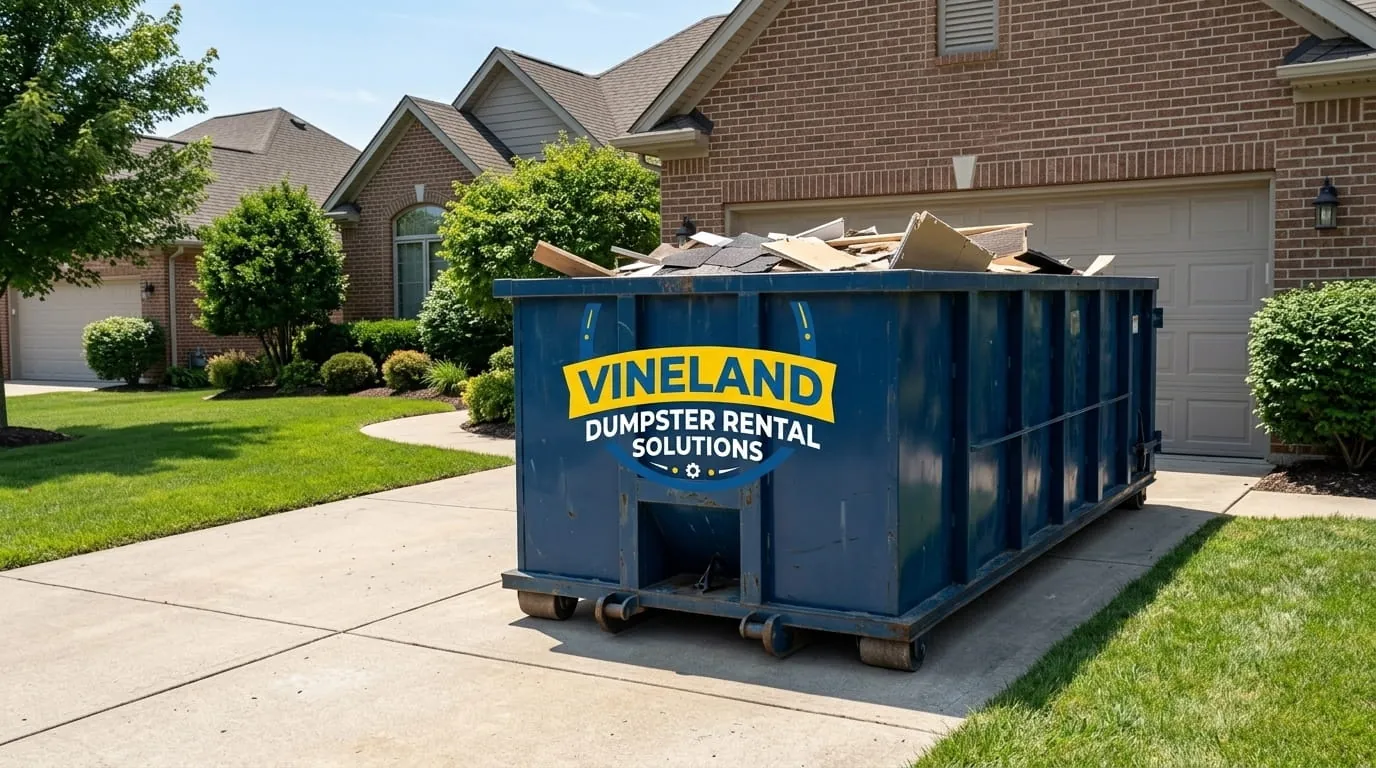
If you have called around for a dumpster in Vineland, you already know the frustrating part: every company quotes it a little differently. One outfit gives you a flat number over the phone in ten seconds. Another wants to know your zip code, the debris type, and how long you need it before they will say a word about price. Both can be honest. But the gap between a good quote and a bad one usually comes down to what is bundled in and what is going to show up as a line item later.
I have been dropping roll-off containers across Cumberland County and the rest of South Jersey long enough to know that "how much does it cost" is really five or six questions stacked on top of each other. Let me walk through them the way I would if you called the yard, so you know exactly what drives the number and where the traps are.
The short answer, and why it is a range
For most residential and light construction jobs around Vineland, you are looking at roughly $300 to $650 for a standard rental. That spread is wide on purpose, because size and weight move the price more than anything else. A small 10-yard bin for a bathroom gut sits at the bottom. A 30-yard for a whole-house cleanout or a roof tear-off sits near the top. Those are illustrative figures for planning, not a locked quote, since your street, your debris, and your timing all nudge it.
Here is what a typical flat-rate rental in this area tends to include: delivery, pickup, a set rental window (usually 7 to 10 days), and a weight allowance measured in tons. Everything past those boundaries is where the extra charges live.
The five things that actually set your price
1. Dumpster size
This is the biggest lever. The common sizes here are 10, 15, 20, and 30 cubic yards, and each step up adds a few hundred dollars of capacity. The mistake people make is renting too small to save money, then needing a second haul, which costs far more than sizing up once. A single 20-yard almost always beats two 10-yards. If you are not sure what your project needs, our dumpster size guide breaks down what actually fits in each container in real terms, not just cubic yards.
2. Rental period
Most local flat rates cover a week to ten days. That is plenty for a weekend cleanout or a driveway project. Contractors running a longer remodel need to ask about the daily rate for keeping the box past the included window, because it is usually $10 to $15 a day and it adds up quietly over a three-week job. If your timeline is fuzzy, say so up front and get the extended-rental number in writing.
3. Weight and tonnage
This is the one that surprises people. Your rental price includes a weight allowance, often 1 to 4 tons depending on the size. Go over it and you pay per ton for the overage, commonly $65 to $95 a ton in this market. Why does it matter? Because debris weight varies enormously. A 20-yard box full of couches and drywall might weigh a ton and a half. That same box filled with roofing shingles, wet plaster, or old deck lumber can blow past four tons without looking full. The container has room; the scale runs out first.
4. Debris type
What you throw in changes both the price and the rules. Clean, sorted material like concrete, brick, block, dirt, or asphalt is heavy, so it usually goes in a dedicated low-boy container with its own flat rate rather than a mixed-junk bin. Mixed household and construction debris is the standard fare. Then there are the items the landfill will not take with everything else: tires, appliances with Freon, paint, chemicals, electronics, and batteries. In New Jersey, electronics and certain items are banned from regular disposal, so those get handled separately or carry a surcharge. Tell your hauler what is going in the box before it arrives, not after.
5. Permits
If the dumpster sits on your own driveway or private property, you almost never need a permit. If it has to go in the street or the public right-of-way, the City of Vineland will want a permit, and depending on the block that can run a modest fee plus a little lead time. Homes on the older, tighter streets near Landis Avenue sometimes have no choice but street placement. A good local hauler will tell you which situation you are in and often help you sort the permit, because we deal with the city regularly.
Not sure which size or price fits your project? Skip the guessing. Call Vineland Dumpster Rental Solutions at (856) 636-4479 and describe your job in plain language. We will tell you the right container, the honest all-in number, and whether your street needs a permit before anything gets delivered.
Flat-rate versus variable pricing
You will run into two billing styles. Flat-rate bundles delivery, pickup, a rental window, and a weight allowance into one price. You know your number up front, and you only pay more if you exceed the tonnage or keep the box longer. Most homeowners are better served by flat-rate because there are no surprises as long as you stay inside the lines.
Variable or itemized pricing breaks everything apart: a delivery fee, a daily rate, and a per-ton disposal charge based on the actual scale ticket. Contractors sometimes prefer this because on a light-debris job they only pay for the weight they generate. The catch is that you do not know the final cost until the box is weighed at the roll-off transfer facility. Neither model is a scam. Just make sure you know which one you are being quoted, because comparing a flat rate against a variable "starting at" price is apples to oranges.
The extra fees worth watching for
This is where cheap quotes turn expensive. The teaser number gets you on the phone; the fees show up on the invoice. Ask about every one of these before you book:
- Overage charges for exceeding the included tonnage, and exactly what the allowance is.
- Extended rental fees per day past the included window.
- Trip or dry-run fees if the truck arrives and cannot deliver or pick up because a car is in the way or the box is blocked.
- Overfill fees for loading above the fill line, which is a real safety and legal limit, not a suggestion. Debris cannot ride above the rim on public roads.
- Prohibited-item surcharges for mattresses, tires, appliances, or anything the facility charges extra to process.
- Fuel or environmental fees tacked on at the end. Ask whether the quote is truly all-in.
None of these are inherently shady. A dry-run fee is fair when a blocked driveway wastes a truck and driver. The problem is only when they are hidden. A straight operator lists them for you before you commit.
How to actually save money
A few things move the needle more than shopping for the lowest sticker price:
- Size it right the first time. One correctly sized box beats a second haul every time. When in doubt between two sizes, the bigger one is usually the cheaper decision.
- Separate the heavy stuff. Concrete, dirt, and brick are dense enough that mixing them into a general bin can trigger overage fees. A dedicated heavy-debris container is often cheaper for those materials.
- Break down bulky items. Knock apart furniture and flatten boxes so you actually use the cubic space you paid for instead of filling it with air.
- Keep the driveway clear on delivery and pickup day. Move the cars. A trip fee for a blocked spot is the most avoidable charge there is.
- Do not overfill. Load level with the top rail. An overfilled box cannot be legally hauled and gets re-quoted on the spot.
- Book local. National brokers advertise low numbers, then route your order to a regional hauler and mark it up. You pay the middleman for nothing.
Why the cheapest quote sometimes costs the most
Here is the pattern I see constantly. A broker or an out-of-town outfit quotes a number $50 under everyone else. It sounds great. Then the box shows up with a one-ton allowance instead of three, so your normal cleanout runs $150 over in tonnage. Or the "week" is really four days. Or there is a delivery fee and a pickup fee that were never mentioned. Or worst of all, you cannot get anyone on the phone when there is a problem, because the company that answered your call is three states away and the actual hauler has never heard of you.
A real quote from a local yard tells you the container size, the weight allowance in tons, the rental window in days, and the overage rate, all before you pay anything. If a quote is missing any of those four numbers, it is not cheaper. It is just incomplete, and the missing pieces are where the money hides.
The honest way to compare is simple: get the all-in price for the size you need, with the tonnage and the rental days spelled out. When two companies quote it that way, the comparison is fair and the lowest legitimate number wins. When one company only gives you a "starting at" figure, treat it as a starting point for a conversation, not a real price.
Getting a real number for your job
Pricing a dumpster is not complicated once you know the levers: size, days, tonnage, debris type, and whether the street needs a permit. Nail those down and the number stops being a mystery. If you would rather just tell someone what you are working on and get a straight answer, that is what we are here for. Reach us any time and we will size it, price it all-in, and get it on your street when you need it. Questions about scheduling or your specific block are easy to sort out on the contact page or over the phone.

Founder, Vineland Dumpster Rental Solutions — sharing straight advice from more than 15 years of local hauling experience.