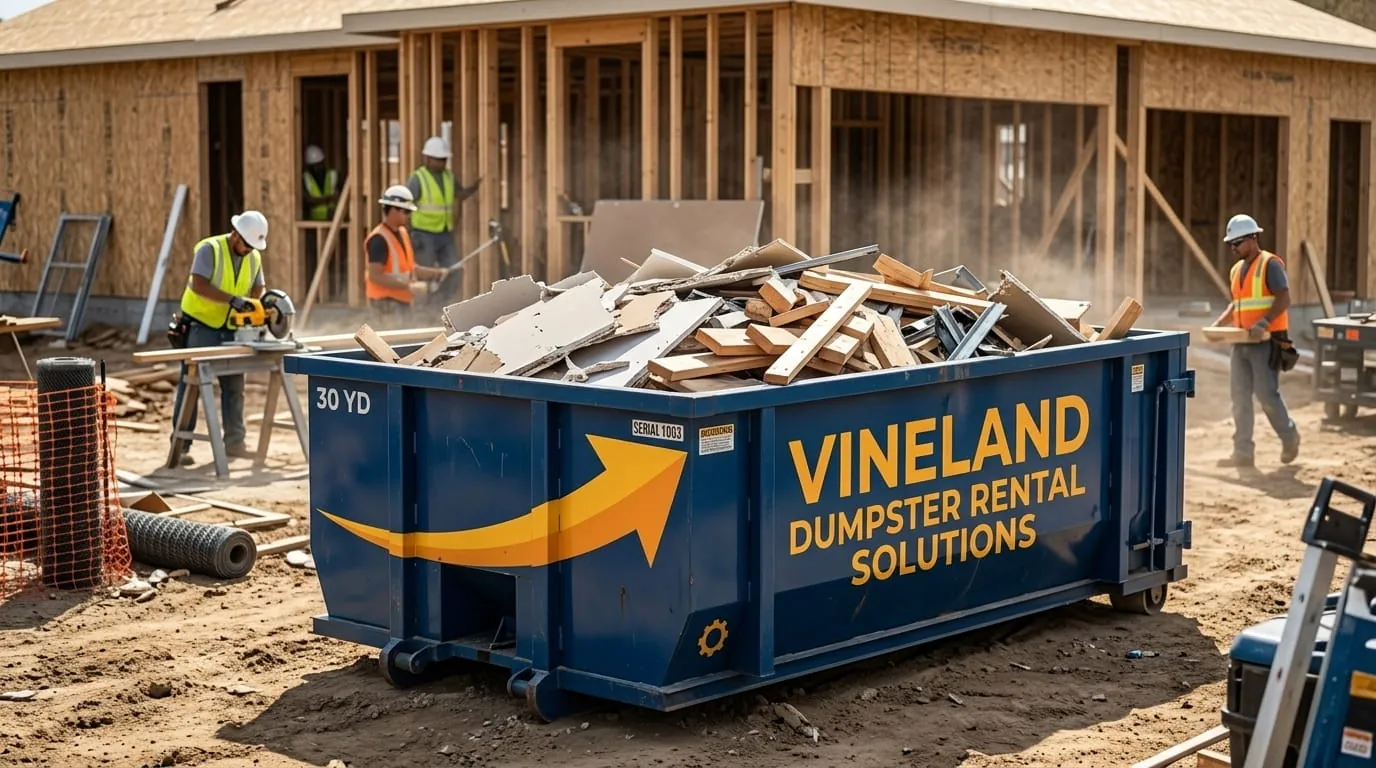
People assume a roll-off dumpster is a one-way trip to the landfill. Fill it, we haul it, it gets buried, done. That's not how it works around here, and it hasn't for a long time. A good chunk of what goes into our containers on a Vineland job never sees a landfill cell at all. It gets pulled, sorted, and sent back into circulation as raw material.
I've been running containers across Cumberland County long enough to watch this change firsthand. Metal prices, tipping fees, county rules, contractor habits — they all pushed the industry toward diverting more and burying less. This is a plain-language look at where your debris actually goes after we pick it up, what's worth separating, and how you can run a project that generates less garbage in the first place.
What Actually Happens to a Loaded Roll-Off
When we haul a full container off your driveway or job site, it rarely goes straight to a landfill. Most mixed construction and demolition debris runs through a transfer station or a materials recovery operation first. That's where the sorting happens — some of it by machine, a lot of it still by hand.
Picture a tipping floor. The load gets dumped, spread out, and workers plus equipment start separating it into streams. Steel and other metals come out because they're valuable and magnetic separation makes them easy to grab. Clean wood gets pulled for grinding into mulch or biomass. Cardboard and paper, if they're not soaked and contaminated, go to the paper stream. Concrete, brick, and block get set aside for crushing. What's left — the genuinely mixed, dirty, non-recoverable fraction — is what heads to the landfill.
The cleaner the load, the more that gets diverted. That's not a slogan. It's economics. A container of separated metal or clean concrete has real recovery value. A container where drywall dust, food waste, insulation, and busted furniture are all mashed together is expensive to sort and mostly ends up buried. How you load the box has a direct effect on where its contents end up.
The Materials Worth Recovering
Not everything is recyclable, and anyone who tells you otherwise is selling something. But four material streams show up on nearly every project and each one has a real second life.
Metal
Metal is the easiest win in the whole business. Steel, aluminum, copper, brass, cast iron — all of it holds scrap value and all of it gets recovered aggressively. Old appliances, HVAC units, water heaters, pipe, rebar cutoffs, aluminum framing, gutters, wire. If you're gutting a kitchen or tearing out a heating system, that metal is worth keeping together rather than burying it under drywall. Recycled steel takes a fraction of the energy to produce compared with smelting new ore, which is why scrap yards will always take it.
Cardboard
On a renovation, cardboard piles up fast — new cabinets, appliances, flooring, fixtures all arrive boxed. Broken down flat and kept dry, that cardboard is one of the most reliably recycled materials there is. The enemy is moisture and food grease. Wet or greasy cardboard fibers can't be reprocessed, so keep it out of the rain and out of the same pile as your wet demo debris.
Clean Wood
Untreated, unpainted dimensional lumber, plywood, pallets, and framing scrap can be ground into mulch, animal bedding, or biomass fuel. The key word is clean. Pressure-treated lumber, painted or stained wood, and anything with heavy hardware or laminate contamination usually can't go into the clean wood stream — those chemicals rule it out. If you're framing a project, the offcut pile is a candidate for diversion. The demolished, painted, nail-riddled stuff is a different story.
Concrete, Brick, and Block
Broken concrete, asphalt, brick, and cinder block are heavy, and hauling them mixed in with light debris wastes container space and weight allowance. Kept separate, this material gets crushed into recycled aggregate — road base, fill, drainage stone. A dedicated container of clean concrete is one of the most divertible loads we handle. Just keep the dirt, rebar, and trash out of it as much as you reasonably can, because contamination is what knocks a clean load down to a dirty one.
Recycling in Cumberland County — the General Picture
New Jersey has had mandatory recycling on the books for decades, and Cumberland County operates within that framework. The county and its municipalities run programs for residential recyclables, and there are established channels for construction and demolition material through licensed transfer and recovery facilities. That's the general shape of it.
Here's my honest advice: specifics change. Accepted material lists, drop-off locations, hours, household hazardous waste collection days, and what belongs in your curbside bin versus what needs special handling — all of that gets updated, and I'm not going to pretend a blog post is a substitute for the current rules. Before you make a plan around a particular facility or program, confirm the details directly with the Cumberland County Improvement Authority or the City of Vineland. For anything going into one of our containers, just ask us — we'll tell you what can and can't ride along, and we keep up with where loads are accepted.
Certain things never belong in a roll-off no matter what: paint, solvents, automotive fluids, batteries, tires, propane tanks, electronics, and asbestos-containing material. Those have their own disposal routes, and mixing them into a debris container can contaminate an otherwise recoverable load or create a genuine hazard. When in doubt, keep it out and ask first.
Working on a cleanout or renovation in Vineland and want to keep it out of the landfill? Call Vineland Dumpster Rental Solutions at (856) 636-4479 and we'll help you size the container and sort the plan before the first board comes down.
Cut the Waste Before It Starts
The greenest debris is the debris you never generate. Diversion matters, but reduction matters more, and it usually saves money too. A few things that actually move the needle on a real job:
- Measure and order tighter. Over-ordering lumber, drywall, and flooring is the single biggest source of avoidable jobsite waste. Buy closer to what you need and you fill fewer containers.
- Deconstruct instead of demolish where it makes sense. Carefully removing cabinets, doors, trim, and fixtures takes longer than swinging a sledge, but it keeps usable material intact instead of turning it into landfill.
- Separate as you go. Set up a metal pile, a clean wood pile, a cardboard stack. Even a rough sort at the source dramatically raises how much gets recovered downstream.
- Right-size the container. A box that's too big tempts people to fill it; one that's too small leads to overloading and side piles. Getting the size right the first time reduces both waste and cost. Our junk removal and dumpster rental service can walk you through sizing based on the actual scope.
- Keep loads dry and clean. A tarp over the container between work sessions keeps cardboard and wood recoverable and keeps you from paying to haul rainwater weight.
Don't Trash What Someone Else Can Use
A surprising amount of what gets thrown into a renovation dumpster still has life in it. Solid-core doors, working appliances, cabinets in decent shape, light fixtures, unused tile and flooring, lumber, hardware — those are the kinds of items that architectural salvage outfits, building material reuse centers, and local nonprofits will take. Around South Jersey there are organizations that accept usable building materials and household goods, some of which resell them to fund community work and hand you a donation receipt in return.
The move is simple: before demo day, walk the space and pull anything that's still functional and reasonably clean. Set it aside. What you can't donate goes in the container; what you can donate stays out of it and out of the waste stream entirely. It costs you a little sorting time and it's genuinely the highest form of recycling there is — the object never has to be broken down and remade at all. Check current accepted-item lists and drop-off or pickup arrangements with the specific organization, since those vary and change.
Why a Local Hauler Should Care
I live and work in this area. The landfill space we fill, the trucks we run, the material we bury or recover — that's not an abstraction to somebody based here. Responsible disposal isn't just a marketing line; it's cheaper over the long run, it keeps us in step with New Jersey's regulations, and it's the difference between an operation that treats Cumberland County like a dumping ground and one that plans to still be working here in twenty years.
What that looks like in practice: we steer recoverable loads to facilities that actually sort them, we tell customers straight when something doesn't belong in a container, and we'd rather help you divert and donate than watch a good door get crushed. You can read more about how we operate on our about page.
Putting It Together on Your Next Project
You don't need a waste-management degree to run a cleaner job. Order tighter so you generate less. Separate the obvious streams — metal, clean wood, cardboard, concrete — because separated material gets recovered and mixed material gets buried. Pull the usable stuff for donation before it hits the box. Keep hazardous material out entirely. And confirm the current rules with Cumberland County or the City of Vineland before you build a plan around a specific program.
Do that and a real percentage of what would've been landfill becomes mulch, aggregate, new steel, or a working door in somebody else's kitchen. That's the whole idea. If you want a hand thinking through a specific cleanout, demo, or renovation and how to keep it low-waste, get in touch — it's the kind of conversation we have every week.
Founder, Vineland Dumpster Rental Solutions — sharing straight advice from more than 15 years of local hauling experience.