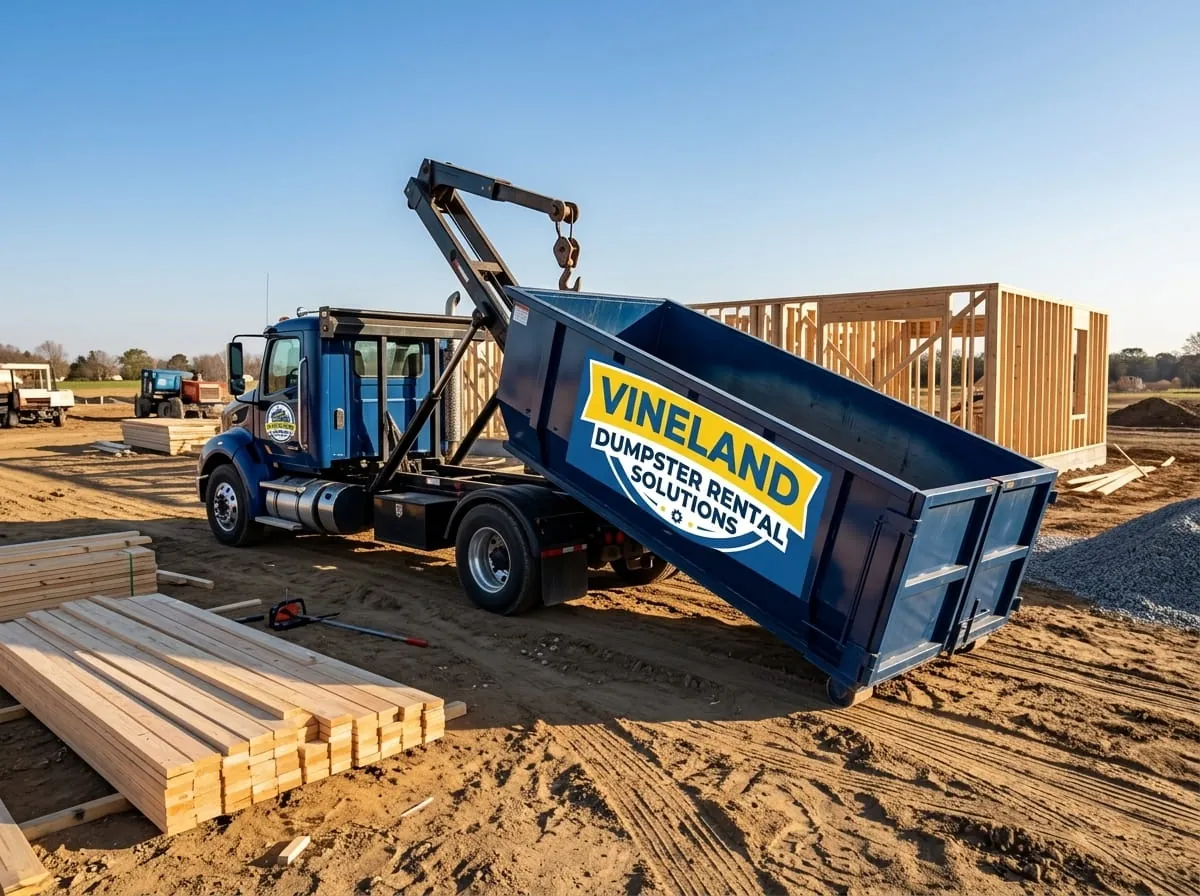
I've been hauling roll-off dumpsters around Cumberland County long enough to know that most jobs don't go sideways because of the framing or the drywall hang. They go sideways at cleanup. A crew fills a container with the wrong mix of material, the load comes in over weight, the transfer station bounces half of it, and suddenly a $400 line item is a $900 headache. Disposing of construction and demolition debris the right way isn't complicated, but it does take a plan you make before the first sledgehammer swing, not after.
This is the guide I wish more general contractors and weekend renovators around Vineland had read before they called me. It covers what actually goes in a construction dumpster, why concrete and masonry get their own rules, how weight quietly wrecks budgets, and how to size the box so you're not paying for air or ordering a second haul.
Know Your C&D Waste Types Before You Fill the Box
C&D stands for construction and demolition, and it's a broad tent. The material coming off a South Jersey job usually falls into a handful of buckets, and how you handle each one determines whether disposal is cheap or expensive.
- Drywall (gypsum board): Light and bulky. It crumbles, it's dusty, and in large quantities some facilities want it kept separate because gypsum releases hydrogen sulfide as it breaks down in a landfill. For a bathroom remodel it mixes fine with general debris. For a whole-house gut, ask first.
- Lumber and dimensional wood: Framing scraps, old studs, subfloor, trim. Clean, untreated wood is one of the most recyclable things you'll generate. Pressure-treated and painted wood is a different animal and often can't go in the recycling stream.
- Concrete, brick, block, and stone: Heavy, dense, and the number one reason loads come in overweight. More on this below because it deserves its own conversation.
- Tile and porcelain: Ceramic and porcelain tile behave like masonry. Dense, heavy, sharp. A tub-to-shower conversion can produce a shocking amount of weight in a small pile.
- Roofing: Asphalt shingles are heavy and usually handled as their own category. A tear-off dumpster is not a mixed-debris dumpster.
- Metal: Copper, steel studs, ductwork, old rebar, appliances. Metal has scrap value, so it's worth pulling out rather than burying it in a mixed load.
The reason to name these categories out loud is that mixing them badly is what costs you money. A dumpster full of clean wood and cardboard is easy and cheap to divert. That same box with a third of it being broken concrete becomes a weight problem the second it hits the scale.
Why Concrete and Masonry Need Dedicated Handling
If you take one thing from this article, take this: concrete, brick, block, asphalt, and heavy tile should almost always ride in their own dedicated container. There are two reasons, and both hit your wallet.
First, weight. A single cubic yard of broken concrete runs somewhere around 4,000 pounds. That's two tons in a space smaller than a kitchen table. Fill a standard 30-yard box with concrete and you're looking at a load no legal truck should be hauling down Landis Avenue. Overloaded containers are a safety issue, a DOT issue, and a reason a driver will flat-out refuse to take the box.
Second, recycling. Clean concrete and masonry are extremely recyclable. They get crushed and turned into aggregate base for roads and driveways. But recyclers want it clean, no wood, no plastic, no drywall mixed in. When you keep your concrete separate, it often goes to a crushing facility at a lower tipping fee than mixed C&D landfill waste. Contaminate it and you lose that path entirely.
Practically, this is why operators offer smaller dedicated boxes for heavy material. A 10-yard container is the workhorse for concrete precisely because you'll hit the weight ceiling long before you fill the volume. Trying to save money by cramming masonry into one big box usually backfires as overage fees or a rejected load. Our team spec's a construction dumpster rental around the material, not just the pile size, for exactly this reason.
Weight Limits: The Number That Actually Governs Your Bill
Homeowners think about dumpsters in terms of how much fits. Operators think in tons. Every roll-off comes with an included weight allowance, and everything past that is charged per ton as an overage. On a demolition-heavy job, weight is the variable that decides your final invoice, not volume.
Here's how to stay ahead of it. Estimate your heavy material honestly. Tile, plaster, concrete, and wet material all weigh far more than people guess. Plaster-and-lath from an old Vineland farmhouse is deceptively heavy because it's dense and often damp. Keep those materials in their own container with an allowance built for weight, and let your bulky-but-light debris, cabinets, drywall, insulation, carpet, fill the volume of a larger box.
Rain is the silent budget killer. An open dumpster left uncovered through a South Jersey thunderstorm can absorb hundreds of pounds of water into drywall, carpet, and wood. Toss a tarp over the box when you knock off for the day. It's free and it pays for itself.
Not sure how the weight math shakes out for your job? Call Vineland Dumpster Rental Solutions at (856) 636-4479 and we'll size it right the first time.
Separating Recyclable Materials on the Job Site
Source separation is a fancy term for a simple habit: sort as you demo instead of sorting at the dump. When your crew puts wood in one pile, metal in another, and clean masonry in a third, three good things happen. Diversion rates go up, tipping fees often go down, and you spend less time paying a facility to hand-sort a contaminated mixed load.
You don't need a recycling center's worth of bins. On a typical remodel, three streams get you most of the benefit:
- Clean wood: Untreated framing, plywood, pallets. High recycling value, easy to divert.
- Metal: Set it aside. Scrap dealers pay for it, and it's the easiest money on the site.
- Concrete and masonry: Its own box, kept clean, headed for a crusher rather than a landfill.
Everything else, the true mixed debris, goes in the general container. For larger commercial tear-outs where you're running multiple streams and multiple boxes, a commercial dumpster rental setup with scheduled swaps keeps the site moving without a mountain of debris blocking the work.
LEED, Diversion Rates, and Why Any of It Matters
If you're doing residential work, you may never touch a LEED form. But the thinking behind it is worth borrowing. LEED, the green building certification standard, awards credits for construction waste diversion, meaning the share of debris that gets recycled or reused instead of landfilled. Projects chasing certification typically need to document that they diverted at least half, often much more, of their C&D waste by weight.
The mechanics are the same whether or not you care about a plaque on the wall. Diversion requires two things: keeping materials clean enough to be recycled, and keeping a paper trail. Facilities that handle sorted C&D can issue tonnage reports showing what got recycled versus landfilled. If your project has any sustainability requirement, a green certification, a municipal mandate, or just a client who cares, tell your dumpster provider up front. We can route material to facilities that report diversion so you have the documentation you need. Sorting after the fact almost never produces clean enough numbers.
Keeping a Job Site Compliant and Clean
A clean site is a safe site, and in Cumberland County it's also a compliant one. Loose debris blowing off a property, nails and sharp scrap in a walkway, and containers overfilled past the rail are the kinds of things that draw complaints and, occasionally, inspectors.
A few operator-tested rules keep you out of trouble:
- Never load above the top rail. If material mounds over the sides, the box can't be tarped for transport, and by law it can't legally roll. An overfilled dumpster is a load that doesn't get hauled that day.
- Know what's banned. No wet paint, no solvents, no fuels, no asbestos, no tires, no batteries, no electronics in a standard C&D box. These have separate disposal channels, and slipping them into a debris load is how you earn a contamination fee or worse.
- Mind placement. On a street or right-of-way in Vineland, you may need a permit and reflective markings. On a driveway, lay down plywood so the container feet don't crack your client's concrete.
- Sweep daily. Magnetic sweep for nails, broom for the rest. It costs ten minutes and prevents flat tires and injury claims.
Choosing Dumpster Size: Renovation vs. New Build
Sizing is where experience saves you real money, and the right box depends heavily on whether you're tearing out or building up.
Renovations and Demolition
Remodels generate dense, heavy debris. Old tile, plaster, cabinets, flooring, and the occasional chunk of foundation. Weight comes fast, volume comes slower. For a single bathroom or a small kitchen, a 10 or 15-yard box is usually plenty, and you'll likely hit weight before volume. For a full-house gut or a whole-kitchen demo, step up to a 20-yard, but keep the heavy masonry in a separate, smaller container so you don't blow the weight allowance on the big box.
New Construction
New builds flip the equation. The debris is bulkier and lighter, cardboard, packaging, cut-off lumber, drywall scrap, insulation, and empty pails. It's high volume, lower weight. This is where the big boxes earn their keep. A 30 or 40-yard container fills up fast with framing and finish scrap but rarely threatens the weight ceiling, so you get the most cubic yards per haul. On an active build, plan for scheduled swaps rather than one box, because debris that piles up faster than it's hauled becomes a trip hazard and a bottleneck.
When in doubt, the honest move is to describe the job to your hauler and let them size it. We do this dozens of times a week around South Jersey, and a five-minute phone call almost always beats guessing. Reach out through our contact page or by phone and we'll match the container to the work.
The Short Version
Disposing of construction debris the right way comes down to a few habits. Separate your heavy masonry from everything else. Respect the weight limit, because it, not volume, sets your bill. Sort recyclables at the source while it's easy. Keep the site swept, keep banned materials out, and size your box to the kind of work you're doing. Do that, and cleanup stops being the part of the job that surprises you.

Founder, Vineland Dumpster Rental Solutions — sharing straight advice from more than 15 years of local hauling experience.