There is no good day to empty a parent's house. You put it off, and then a deadline arrives anyway – the estate needs to settle, the property has to list, a sibling flies in for one week only. Suddenly you are standing in a doorway in Vineland with a coffee going cold in your hand, looking at forty years of a life, and you have no idea where to begin.
We have hauled debris out of a lot of these homes across Cumberland County. Landis Avenue rowhomes, farmhouses out toward Rosenhayn, split-levels near the Boulevard. And the thing nobody tells you is that the hard part is almost never the dumpster. It is the deciding. So this guide is built around the deciding, with the practical logistics folded in where they belong. Take it slow. You are allowed to.
Before You Throw Away A Single Thing
The most common regret we hear is not “we kept too much.” It is “we tossed something in the first weekend that we would give anything to have back.” Grief makes people either freeze or blitz. Both are dangerous in the first days. So before anyone rents a bin or fills a bag, do three things.
1. Secure the valuables and the paperwork first
Walk the house once, calmly, with a box and a notepad. You are not cleaning. You are collecting the things that would be painful or expensive to lose. Pull them out and put them somewhere locked before any cleanout labor starts – because once helpers and haulers are moving fast, small important things vanish inside big unimportant things.
- Legal and financial: the will, deeds, titles, insurance policies, tax returns, bank and brokerage statements, Social Security card, military discharge papers (the DD-214), birth and marriage certificates.
- Cash and valuables: older folks hide money. Check envelopes taped under drawers, coat pockets, freezer bags, the pages of books, coffee cans, the mattress. Jewelry, coins, watches, firearms.
- Keys and access: safe-deposit box keys, spare car keys, storage-unit keys, a written list of passwords or a checkbook that reveals accounts.
- Anything that looks like nothing: savings bonds, stock certificates, and old life-insurance policies still turn up in shoeboxes. When in doubt, set it aside.
Shred, do not just toss, anything with account numbers or a Social Security number on it. Identity theft against the recently deceased is real and ugly.
2. Take photos before the room changes
Walk each room on your phone in video, drawers open, closets included. It protects you if a family member later asks where something went, it helps with insurance and estate valuation, and honestly, a year from now you may want to remember what the kitchen looked like. It costs ten minutes.
3. Do not sign anything or promise anything yet
If you are the executor, you have a legal duty to the estate and to the other beneficiaries. Do not let one relative back a truck up the driveway and start “taking a few things.” Nothing leaves until the valuables are secured and there is at least a rough agreement. This one boundary prevents most family blowups.
Sorting: The Four-Pile Method That Actually Works
Once the valuables are locked away, the rest of the house sorts into four categories. Physically separate them – different rooms, or colored tape on boxes. Trying to make every decision in your head at once is what makes people quit by lunch.
- Keep. Items going to family members. Be honest about space; a keepsake in a storage unit you pay for indefinitely is not really kept, it is deferred.
- Sell or appraise. Anything that might have real value – furniture, tools, collectibles, jewelry, coins, a car. When unsure, get it looked at before it leaves.
- Donate or give. Usable clothing, housewares, working furniture, books, kitchen goods.
- Dispose. Broken, stained, expired, soiled, or truly worthless. This is the pile that fills a dumpster, and it is almost always bigger than families expect.
Work one room at a time and finish it before moving on. A single closed-out room gives you a small, real win, and on these jobs the wins are what keep you going.
A word on the “maybe” pile
Everyone starts a maybe pile. Everyone. The trick is to put a lid on it – one box, physically. When the box is full, you have to make actual decisions before adding more. A maybe pile with no limit is just the whole house, relocated.
The Sentimental Stuff – Where It Gets Hard
Here is the truth: you cannot keep it all, and you do not need to. The love is not stored in the object. But that is easy to say and brutal to do at 9pm surrounded by your mother's handwriting on grocery lists.
A few things that help real families get through it:
- Photograph, then release. For the hundred things you cannot keep but cannot bear to trash, take a good photo. The memory survives; the clutter does not.
- Keep the representative piece, not the whole set. One teacup from the collection, not all twelve. One apron, not the drawer. The single object carries the story better than the pile ever did.
- Let each grandchild pick one thing. It spreads the meaning around and quietly empties the house.
- Do not make big sentimental calls exhausted. If you are crying and it is late, stop. Tag that box “decide later” and come back rested. The dumpster can wait a day.
And give yourself grace on the photos, the letters, the kids' report cards. Those weigh almost nothing. If keeping a box of paper memories gets you through the harder decisions, keep the box. This is not a minimalism contest.
Working With Family Without A War
More estates are damaged by how the cleanout was handled than by the money involved. Everyone is grieving differently and on a different clock. Some people process by clinging to objects; some by purging. Neither is wrong, but put them in a house together with no plan and you get a fight that outlives the parent.
What we have watched work:
- Meet before you touch anything. Agree on the timeline, who is doing what, and how disputes get settled. Fifteen minutes up front saves fifteen years of resentment.
- Use a fair method for contested items. Take turns choosing, oldest to youngest and back again. Or write names on slips for the big pieces. Whatever it is, agree on it out loud.
- Do the valuables together, or with a neutral third party. No one should be alone in the house with the jewelry box. Not because you distrust anyone – because being able to say it was done openly protects everyone.
- Let the far-away sibling contribute. If they cannot fly to Vineland, they can handle paperwork, call the utilities, or split the dumpster cost. People make peace with the outcome when they had a job in it.
If a relationship is already broken, an estate cleanout will not fix it – but a written plan will keep it from getting worse.
Donation vs. Disposal: What Goes Where in South Jersey
Sorting the “out” pile into donate versus dispose saves money and does some good. A rough rule: if you would let a friend use it, donate it; if you would apologize for handing it over, dispose of it.
Good donation candidates: clean usable clothing, working small appliances, dishes and cookware, books, solid furniture, linens, unopened toiletries. Around Cumberland County, Goodwill and several church and community thrift programs take these, and some will pick up larger furniture if you call ahead. Get a receipt – charitable donations from an estate can matter at tax time.
Headed for the dumpster: stained mattresses, broken furniture, worn carpet and padding, expired food and medicine, ripped bedding, damaged upholstery, and the sheer volume of ordinary stuff that has no second life. Do not spend precious energy trying to donate things nobody will take; a full-house cleanout produces more than most people picture, and forcing every trash bag into a “maybe someone wants this” loop just stalls the whole job.
Handle separately – these do not belong in a standard dumpster: paint and solvents, motor oil and gasoline, car batteries, propane tanks, pesticides, and electronics. New Jersey bans TVs, computers, and monitors from the regular trash, so old electronics need proper e-waste drop-off. Cumberland County holds household hazardous waste collection events; keep those items in a corner of the garage until one comes up. If you are not sure whether something can legally go in the bin, ask us when you order – we would rather answer the question than have you fined.
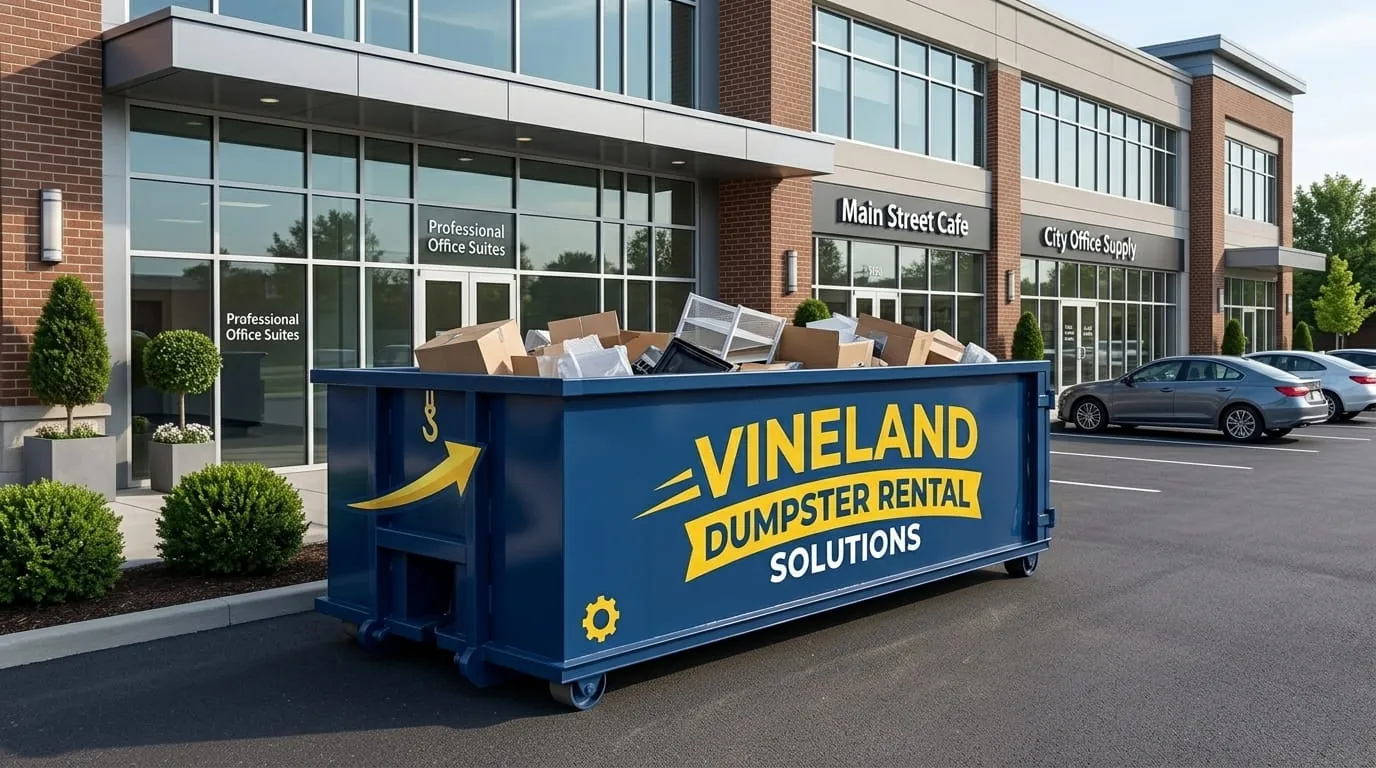
For the volume that a car-load-at-a-time approach can never keep up with, this is exactly what a roll-off is for. If you would rather not touch the heavy or unpleasant items at all, our junk removal and dumpster service can do the loading for you.
Picking The Right Dumpster Size
People wildly underestimate how much a lived-in home holds. Attics, basements, garages, sheds, and forty years of “might need it” add up fast. Renting one bin that is too small means a second delivery fee and a second round of momentum you have to rebuild. Here is the honest guidance we give Vineland families.
- Small apartment or single-room clearout: a 10-yard is usually enough.
- Average two- or three-bedroom home, moderate accumulation: a 20-yard dumpster is the workhorse. It swallows furniture, mattresses, boxes, and general household debris without towering over the driveway.
- Full house, a heavy accumulator, or decades in one place: step up to a 30-yard. When in doubt on a whole-house job, the bigger bin costs less than a second haul.
Two practical notes for our area. First, driveway space – on the tighter lots off Landis or Chestnut, we will talk through placement so the bin does not block you in or ding the concrete. Second, weight – if the house is loaded with old plaster, tile, or a lot of books, tell us, because dense loads have weight limits and we would rather size it right than surprise you.
Not sure which way to lean? Call and describe the house. We have done enough of these to size it over the phone in about two minutes.
Talk to a local who has done this before – call Vineland Dumpster Rental Solutions at (856) 636-4479. Same-day and next-day drop-off across Cumberland County, and no pressure. We will help you get the right bin the first time.
A Realistic Timeline For Executors
If you are the executor, you are balancing grief against a legal clock, and the two do not keep the same time. You do not have to gut the house next week – but you also cannot let it sit indefinitely while insurance, taxes, and utilities keep running. A workable pace for most estates:
- Week 1–2: Secure the property. Change or check the locks, forward the mail, notify utilities, and remove valuables and documents. Do not start cleaning yet.
- Before you clear anything of value: if the estate is going through probate, understand that assets may need to be inventoried or appraised first. A quick call to the estate attorney saves you from undoing a mistake.
- Weeks 3–6: The sort. Family takes their keepsakes, appraisers see what needs seeing, donations go out, and the disposal pile grows. This is when the dumpster earns its keep.
- Final push: Once keep, sell, and donate are handled, the cleanout itself often takes just a few focused days with a bin on site – especially if you are prepping the home to sell.
If the house is listing, the cleanout usually needs to be done before photos and showings, so back-plan from the listing date. And if you simply cannot face doing it in stages, that is okay too – plenty of families book the bin and knock the whole thing out in one hard weekend with everyone pitching in.
Doing It With Dignity
A few last things, from people who have stood in these houses.
Eat, drink water, and take breaks. Grief and physical labor together will flatten you, and dehydrated exhausted people make decisions they regret. Wear real gloves and closed shoes – old houses hide broken glass, mouse mess, and nails.
Say goodbye to the house in whatever way is yours. Some families share a meal in the empty kitchen before the last load. Some walk each room one final time. There is no wrong version.
And be gentle with each other. Someone will get short-tempered. Someone will cry over a dish towel and be fine about the wedding china. That is grief, not a character flaw. The house is not the person, and clearing it is not erasing them – it is carrying them forward and letting the rest go.
When you are ready for the practical part, we are here, and we will treat your family's home the way we would want ours treated. Reach out any time through our contact page or just call. There is no rush on our end.
Founder, Vineland Dumpster Rental Solutions — sharing straight advice from more than 15 years of local hauling experience.