Every house in Cumberland County holds more than the people living in it. It holds the treadmill nobody's touched since the second week of January, the box of your kid's grade-school art you swore you'd scan, the paint cans in the basement that have been there longer than the current homeowner. A cleanout is how you get the house back. And after two decades hauling this stuff out of homes from Vineland to Millville to Bridgeton, I can tell you the people who finish are the ones who work with a plan. The ones who quit are the ones who open the garage, feel the weight of it, and go back inside.
This is that plan. Room by room, with a real order of operations, honest advice on what to keep and what to let go, and the practical stuff nobody tells you: which dumpster size actually fits a full-house cleanout, where to drop donations in South Jersey, and how to stage the work so you're not tripping over your own piles on day three.
Before You Touch a Single Box: Set the Stage
Do not start in the room that stresses you out most. That's the mistake. You attack the attic on Saturday morning full of energy, four hours later you're sitting in a pile of insulation dust surrounded by 40 percent of the job, and the momentum is gone.
Instead, start with a staging area. Pick a spot near where your dumpster will sit, usually the driveway or garage, and set up four zones with masking tape and a marker on the floor: Keep, Donate, Sell, and Toss. Everything that comes out of a room lands in one of those four spots. No "I'll decide later" pile. The later pile is where cleanouts go to die.
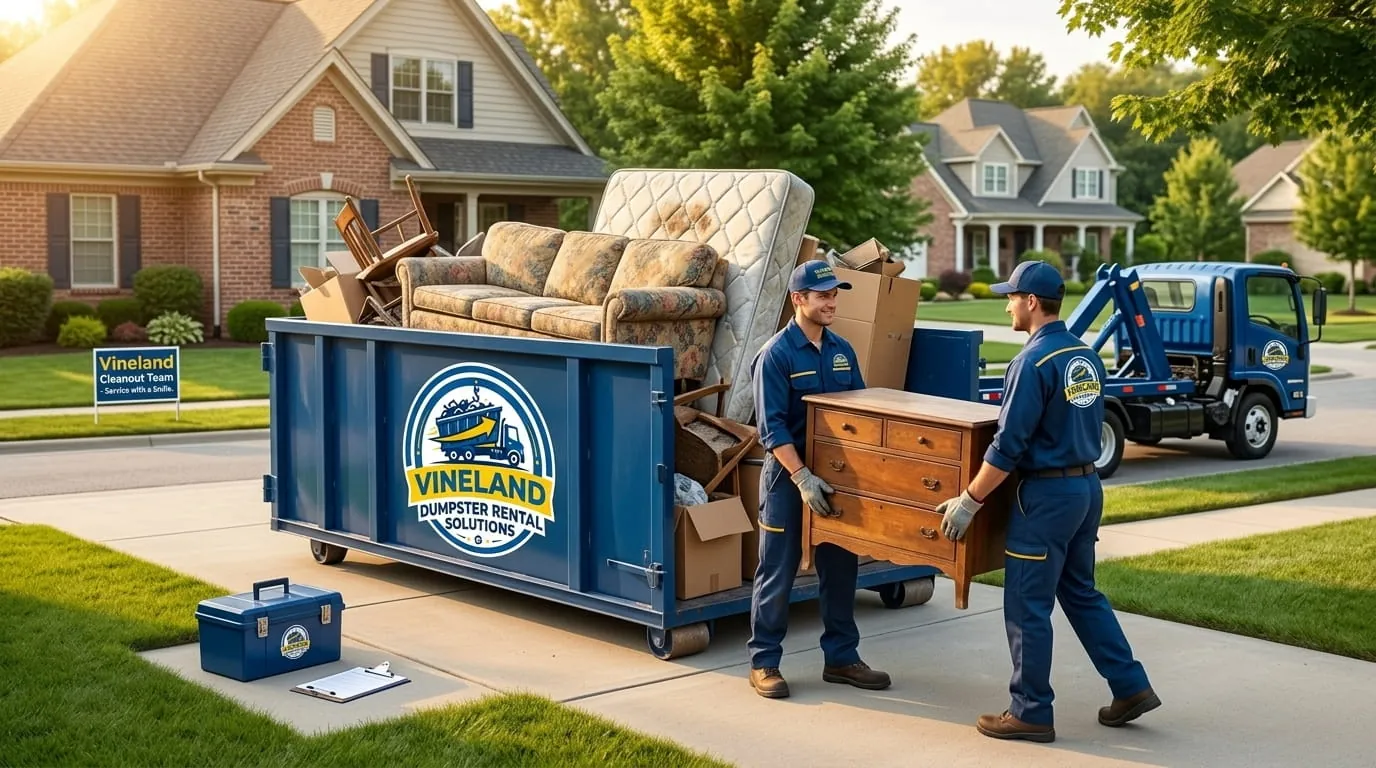
Get your dumpster on site before you begin, not halfway through. Nothing kills a weekend like filling every trash bag you own and then having nowhere to put them. If you're doing a whole-house cleanout, book the container for the start of your window so it's waiting when you are.
Supplies to Have Ready
- Heavy contractor trash bags (the 3-mil ones, not the kitchen bags that split)
- Two sizes of moving boxes for Keep and Donate items
- A real marker and painter's tape for labeling
- Work gloves and an N95 mask, especially for the attic and basement
- A hand truck or dolly if you've got appliances or heavy furniture
- A folding table for sorting small stuff so you're not bent over all day
The Room-by-Room Order That Actually Works
Work from easiest to hardest, and from the outside of the house inward. Momentum is the whole game. You want three or four visible wins before you hit the emotional rooms. Here's the sequence I give every homeowner.
1. The Garage (Start Here)
The garage is the perfect opener because most of what's in it isn't sentimental. It's dried-out paint, busted tools, bikes three sizes too small, and the cardboard mountain from every online order since the pandemic. Pull everything to the driveway. Yes, everything. You can't sort what you can't see.
Toss: hardened paint, cracked hoses, rusted tools, broken lawn furniture, anything with a cord that hasn't worked in years. Donate: working hand tools, sporting goods, bikes that still roll. Keep: only what you'll use this year. If you're storing it "in case," and the case hasn't come in five years, it's not coming.
One note for South Jersey homeowners: old paint, motor oil, pesticides, and car batteries do not go in the dumpster. Cumberland County runs household hazardous waste collection days through the year at the county recycling facility on Landis Avenue. Set those items aside for a drop-off.
2. The Basement
Basements down here take on water, and water ruins boxes. A lot of what you find will already have made the decision for you: mildewed cardboard, warped particleboard furniture, rusted-out shelving. Trust your nose. If it smells like the basement, it goes.
Go section by section along the walls rather than diving into the middle. Toss: damaged furniture, old carpet remnants, dead electronics, the exercise equipment (be honest). Donate: intact furniture, books that stayed dry, kitchen overflow. Keep: holiday decorations you actually put up and genuinely important documents, which should move upstairs into a sealed bin, not back into the damp.
3. The Attic
Save the attic for when you've got energy and daylight. It's hot, it's tight, and the footing is bad. Wear the mask. Attics are where the true archaeology lives: old furniture, luggage from the Reagan administration, and the boxes labeled in your parents' handwriting.
This is the room where the Keep pile earns its keep. Genuine heirlooms, a handful of photo boxes, the crib you're saving for grandkids. Everything else, the dead office chairs and the mystery boxes, comes down and gets sorted at ground level where you can actually think.
4. The Kitchen
Kitchens are deceptive. They look tidy but every cabinet is packed with duplicates and expired everything. Empty one cabinet at a time onto the counter and be ruthless.
Toss: scratched nonstick pans, chipped mugs, cracked storage containers, and anything in the pantry past its date. Donate: the second slow cooker, the bread machine, the 30 coffee mugs you'll never drink from at once. Small working appliances are exactly what donation centers want. Keep: the tools you reach for weekly. If you've got a gadget drawer, tip it out and see what you honestly use.
5. Bedrooms and Closets
Now the emotional work. Clothing is the big one. Pull everything out of the closet and use the hanger test on what goes back: turn every hanger backward, and over the next season, only turn it forward when you actually wear the item. What's still backward come spring is what you don't wear.
Donate: clothing in good shape, shoes, coats, linens, and blankets, which shelters need constantly. Toss: stained, torn, or stretched-out items nobody would buy. Keep: what fits your actual life now, not the one from three sizes or one job ago. Work in short bursts here. Closets are where people stall out because every item has a memory attached. Set a timer, make quick calls, move on.
Buried in it and need a container this week? Vineland Dumpster Rental Solutions drops the right size at your curb and hauls it when you're done, so you can focus on the sorting and not the disposal. Call (856) 636-4479 and we'll help you pick a size that fits the job.
What Size Dumpster for a Full Home Cleanout?
This is the question I get more than any other, and the honest answer is that people almost always guess low. Household junk is bulky and light. It fills volume fast without ever getting heavy, which means you run out of space long before you run out of weight limit.
Here's the rough guide I give homeowners across Cumberland County:
- 10-yard: a single room, a small garage, or one focused project. Fine for a targeted attic or basement clear, undersized for a whole house.
- 20-yard: the sweet spot for most home cleanouts. A two or three-bedroom house, garage plus basement, or a heavy declutter. This is what I'd steer the average family toward. See our 20-yard dumpster for dimensions.
- 30-yard: a full estate cleanout, a larger home, or when furniture and appliances are going out in volume. When in doubt on a big job, size up. Paying for one container beats renting two.
One 20-yard load ordered right beats two 10-yard swaps ordered wrong, both in cost and in the hours you don't spend waiting on a second haul. If you're not sure where your project lands, our residential dumpster rental page breaks it down, or just call and describe your house. We size these every day and we'd rather get it right the first time.
A Realistic Weekend Timeline
A full-house cleanout is a two to three-day job for most families, not an afternoon. Fighting that reality is why people burn out. Here's a pace that finishes.
Friday Evening: Setup
Container arrives. Build your four staging zones. Gather supplies. Do the garage tools-and-cardboard first pass if you've got an hour of light left. Small win before you sleep.
Saturday: The Heavy Lifting
Garage, basement, attic. The bulky, unsentimental rooms. This is your big dumpster day and where most of the volume goes. Take real breaks, hydrate, and don't try to sort while you're carrying, that's how backs go out. Two people move roughly twice as fast as one, so call in help.
Sunday: Detail Work
Kitchen, bedrooms, closets. Slower, more decisions, more emotion. Finish by loading the last of the Toss pile and staging Donate boxes by the door for Monday drop-off. Book the pickup for early in the week so the container's gone before it becomes lawn furniture.
Where to Donate in South Jersey
The Donate pile only counts if it leaves the house. Load it in the car the same day you sort it, or it drifts back inside. Good options around Vineland and Cumberland County:
- Goodwill and Salvation Army locations in Vineland and Millville take clothing, housewares, small appliances, and furniture in usable condition.
- Habitat for Humanity ReStore in the region takes furniture, building materials, appliances, cabinets, and fixtures, ideal for the bigger stuff and it funds local home builds.
- Local shelters and church thrift programs across Cumberland County are always short on coats, blankets, and linens, especially heading into fall.
- Cumberland County household hazardous waste days for the paint, chemicals, batteries, and electronics that can't go in a dumpster. Check the county schedule before you drop.
Call ahead on furniture. Some centers won't take upholstered pieces or need them clean and stain-free, and a wasted trip with a loaded car kills momentum fast.
The Bottom Line
A cleanout isn't really about junk. It's about walking into a garage you can park in, an attic you can stand up in, and a house that holds your life instead of your history. Do it in order, sort into four piles and only four, get the right container waiting before you start, and give it the two or three days it honestly takes.
When you're ready to pull the trigger, we'll handle the part where all of it disappears. Reach us at (856) 636-4479 or through our contact page, and we'll get a dumpster to your driveway so the only thing you have to think about is what stays and what goes.

Founder, Vineland Dumpster Rental Solutions — sharing straight advice from more than 15 years of local hauling experience.